When you’re building a product, creating a steady stream of customer feedback is crucial. Josh Porter puts this well: One has to go after feedback with a club.
When I first launched NanaGram, a service that helps people mail printed photos in the mail to their loved ones every month, I posted to Reddit’s /r/shutupandtakemymoney and it unexpectedly blew up. I was inundated with comments. While I love Reddit, the commenting medium tends to be less useful than other mediums like phone calls and user interviews. Plus, blowing up somewhere has the downside of being a temporary spike when startups are about evolving and need constant feedback.
The highest quality customer feedback tends to come from mediums that require the most work. These hard-work mediums tend to put you closer to the customer, ideally as they’re facing some sort of problem. Support phone calls and user interviews are two of my favorite feedback mediums. Written, digital feedback (live chat, email, surveys, social media, etc) suffers from a huge drop in fidelity of emotion. Emotions, like whether someone loves, dislikes, or is indifferent about something, are much easier to pick up when you can hear someone’s voice. It’s like the difference between an early 2000s, low-quality MP3 downloaded from Limewire playing through your phone vs. a vinyl record on a pair of hi fidelity speakers. Makers need a steady stream of high-quality feedback to create and grow something great.
Recently I discovered an awesome way to get customer feedback: Voicemails. Just before implementing voicemail feedback, I built a way for people to post reviews to our home page. I’ve been so grateful for all of the reviews NanaGram senders (kids and grandkids) have been writing. Many of them upload awesome photos of their loved ones holding their NanaGram prints! ?
Even though these written reviews and photos are a source of inspiration, I wasn’t hearing from an important segment of my customers: NanaGram recipients. Plus, there’s just something different about hearing someone’s voice. I started adding a 4×6 photo insert to each shipment:
Since then, I’ve been getting 2-3 voicemails per week. The pure joy and excitement for NanaGram is like maker jet fuel for me. I’m taking this a step further, sending thank-you notes with stickers and calling back each person who leaves me a voicemail.
This week I started reading Rob Walling’s book on software startups, Start Small, Stay Small. One of the points Rob makes early in the book is it’s best to start focused on a niche. Being niche-focused allows you to compete with well-funded products which often solve broad or multiple problems.
NanaGram‘s niche is sharing photos with grandparents. We help you mail monthly printed photos with just a text message or email. My 94-year-old grandparents (twice great-grandparents) were the first NanaGram recipients. My brother and I built the initial version for fun, as a gift to our grandfather on his 94th birthday.
We compete with digital giants like Facebook and Instagram and print giants like Walgreens, CVS, Walmart, Shutterfly, Snapfish, Groovebook, and Amazon. I say “we” when in reality NanaGram is currently a one-man shop. Because of the niche focus, I’ve been able to make a product hundreds of people love on my own, with no outside funding. (Not without moral support from my family, friends, and customers — especially my brother Andy, who is cranking away on Tettra.) One way I’ve done this is by building features specific to grandparents which the giants would never build, like NanaGram’s cover photo.
Growing up and staying in touch
Over the years, my three siblings and I have been fortunate to have very involved grandparents. We saw them at holidays, birthdays, and they came to almost all of our sporting events, recitals, boy scout events, and more. My Mom raised us to do a good job keeping in touch with our grandparents at a distance. Any time they gave us a gift, we sent a thank-you note. When we traveled, we sent a postcard. We talked on the phone. As we became adults and our grandparents entered their 80s and 90s, we continued these good habits. Due to his hearing loss as a child, my grandfather was never able to have a full conversation on the phone. My grandmother was a career telephone operator and loves talking on the phone. Whenever we’d call, she’d relay updates to our grandpa.
My youngest brother Adam became an Eagle Scout. My grandfather, also an Eagle, came to the ceremony proudly wearing his sash.
The moment our niche cover photo feature was born
I made the first NanaGram photo delivery to my 94-year-old grandparents in-person. They were ecstatic. This was the first time they had fresh printed photos from each of their grandkids at once. My grandma asked me to write down everyone’s phone number so she could call my siblings and thank them. Her phone book seemed to always be missing. This wasn’t the first time she asked. As I wrote down their numbers for what seemed like the 50th time by hand, I decided at that moment to build the first version of the NanaGram cover photo. The idea was pretty simple. I’d print the names and phone numbers of everyone on the account on a photo and add it to the top of the stack.
Our cover photo displaying names and phone numbers.
About a month later, I realized I was the only lucky one to get mail from Grandma in her 90s. Years ago my Grandma became Reddit famous for a day for a note she sent me in the mail containing a quarter. My siblings didn’t get as much mail as I did, mainly because in the past decade I’ve stayed put while my brothers have moved around. Grandma could never seem to find their current addresses. I improved the cover photo more, allowing customers to optionally list their shipping address in addition to their phone number. Because who doesn’t love getting stuff in the mail from their grandparents?
Visiting my awesome 90-year-old grandparents last week and asked, “Can I use your rest room?”, to which my Grandma replied, “for 25 cents!”. So I left a quarter next to the toilet just for fun and got this in the mail today.
When they get a NanaGram delivery in the mail, many recipients call everyone listed on the cover photo. This is important for me personally. Because while as a business we make money by printing and shipping photos, my personal measure of success is whether the product helps spark more regular and meaningful connections between loved ones.
Niche features like our cover photo have created so many magical moments for NanaGrammers. Hearing about these moments has also helped me push forward when things get tough — startups aren’t easy. I plan to stay focused on this niche for a while. It feels like I’ve just started scratching the surface.
Thanks to Tadas Antanavicius, Bob Lowry, Katie Woods and Nelson Joyce, Mike Miklavic, and Adam Cook for reading drafts of this post.
The best photo gift ideas for grandparents, hand picked and tested with love, including our favorite photo album and magnetic pins.
The best gift for grandparents is probably giving them grandkids. The next best gift is photos of their grandkids. Here are some of our favorite gifts to help your grandparents organize and display their photos around the home.
These albums are surprisingly high-quality for the price. They feel nice, too.
The first time I ordered one of these I was blown away by the quality. The window slots for each photo are thick and strong, it features margins for notes, and the cloth feels nice. There’s a slot behind the cover to display your favorite photo on the front. These come in many different colors. Be mindful of the price differences. If you’re sending photos on a regular basis with a service like NanaGram, these albums are a perfect way to collect and share photos in one place.
Acrylic photo frames are a unique way to display 4×6 prints around the home. Each frame is made of two, clear plastic pieces held together with strong corner magnets. Your photo goes in the middle. Use two photos for a double the fun. The frames stand on their own and look almost like ice.
My cousins send my aunt fresh monthly prints on NanaGram. Every month she puts the new prints in acrylic frames around her home. When the next shipment comes, she moves last month’s photos into an album.
Most of us who grew up pre-Internet remember the days of refrigerators covered in photos and other keepsakes. As papers come and go, magnets seem to stick around. I still remember some of the magnets my grandma had on her fridge for decades. Many of them were free marketing swag from cereal boxes and the like. Because free magnets often aren’t strong enough keepsakes end up on the floor sometimes.
Magnetic pins to the rescue. Magnetic pins are shaped like standard push pins except they contain powerful, tiny magnets. In a test, I found one pin can hold 3 4×6 photos at once. They’re easy for people of all ages to handle. You can get a pack of 56 pins for $12.99 on Amazon ($0.23 each).
Digitize their wedding album
Free-ish
Grandma and Grandpa Cook on their wedding day, dancing the night away and looking like movie stars.
Consider (carefully) scanning your grandparents’ wedding album. Once you have the digital files, you can reprint on all sorts of formats. For many grandparents, photos from their wedding album are the only copies they have. The photos rarely see the light of day. Digitizing their album and re-printing the photos in new formats is guaranteed to be a magical gift.
Growing up, I remember seeing my grandparents’ photo album a few times. With a recent wedding on the horizon, my grandparents started pulling out their wedding album nearly every time I visited. When I brought along my fiance (now lovely wife) Katie, Grandma Cook would do everything she could to convince her to get an ankle-length dress, just like hers. Grandpa Cook was proud of the fact that they hired a female photographer, which was apparently rare in those days.
One day while visiting my grandparents I decided to take their wedding album home to scan it in. I started sending copies from their wedding album into NanaGram. Their wedding photos started popping up on their fridge.
Money-saving tip: If you don’t have access to a high-quality scanner or can’t afford to pay an archival company to do it for you (try Googling for photo scanning in your city), even just snapping photos of the photos with your phone is an inexpensive way to get started. (If you do decide to hire a company to help you scan the photos, I’d suggest working with someone locally to avoid losing your precious memories in shipping transit.)
I’m obviously biased, being the founder of NanaGram. If you’re not a customer already, consider NanaGram. We help you mail 4×6 prints to your grandparents with just a text or email. Plans start at $7.99 per month for 10 photos which includes printing, shipping, and unlimited invites. Sign up for a free trial.
Find and develop old disposable cameras and film
If you were born in the 60s, 70s, or 80s, chances are your family used disposable cameras. My mom must have had a collection of nearly 75 old cameras she never got around to developing. One year I had all of these developed. It was fun to go through the prints as a family.
One of the many awesome photos we found on an old, undeveloped disposable camera.
Thanks to Bob Lowry, Katie Woods, and Andy Cook for reading drafts of this post.
Years ago I enjoyed a bite to eat with Dharmesh Shah and my brother Andy and we talked about startup names. We’d just raised a small angel round with Dharmesh as the first investor in. Our idea was to create eBay for renting physical products (mostly bouncy castles), and we’d dubbed it Rentabilities. While Dharmesh was incredibly supportive, he urged us to think about changing our name.
We went through MassChallenge’s first batch and won $50k just before Dharmesh invested.
A fun, banter-filled conversation began while feasting on one of Dharmesh’s favorite dishes, arancini. We agreed there were so many issues with the name Rentabilities: All the i’s, it was hard to spell, and it had five syllables. But our startup had so many other problems besides our name. We convinced Dharmesh we’d put our name problem on the back burner for a while because while it wasn’t a very simple name, the domain name was available and we passed the “Grandma Test.”
The Grandma Test was a thing we coined at this dinner. At the time, our grandmother was in her late 80s. She and my late grandfather were always curious about what Andy and I were up to. We told them about how we’re going to help thousands of people rent bouncy castles and call it Rentabilities. My grandmother’s brain is packed full of information and wisdom from over the years. Which means, even by her own admission, she sometimes forgets stuff. A week later Grandma Cook remembered the name of our enterprise and what it did. We passed the Grandma Test.
Years later we shut down Rentabilities joined HubSpot. As life powers on, I keep taking the Grandma Test.
Last winter, Andy and I launched a side project called NanaGram, a gift we gave to our late grandfather on his 94th birthday. We wanted to make our grandparents feel more connected. We gave our family a unique phone number, asked them to text message their photos to it, and every month we’d print and ship 4×6 photos to our grandparents. When I dropped off the first set of photos to my 94-year-old grandparents I left some business cards and magnetic fridge pins. I came back a week later to find the fridge totally covered in photos. The walls were covered in scotch-taped photos too. NanaGram passed the Grandma Test. I came back a month later and something unexpected happened.
My grandmother loved the idea for NanaGram so much that she started pitching it to strangers. Anytime anyone would enter her house, whether it be a plumber or a nurse, she’d ask them “do you have any kids?” then listen intently to stories about other people’s kids and grandkids. Then she’d ask, “do you take lots of photos of your kids?” and again patiently listen and talk all about her mutual love for photos. Finally, she’d say “well my grandson has a business called NanaGram…”, and tell them all about it. Then she’d grab a business card and hand it to them with a big smile saying, “Take a ticket!”
A couple weeks ago I discovered a new book by NY Times journalist John Leland, Happiness is a Choice You Make, exploring life of the “oldest old” (people 85+) via an NPR podcast. What started as an assignment at the NY Times blossomed into beautiful book about the lives of six people 85 and older living in New York City. Leland’s book has helped me pause and put to words many of the profound lessons I’ve been learning while getting together every couple of weeks with my grandpa, Tirrell Cook.
For the past 18 months, I’ve been on a journey with my grandpa. At 94, he’s definitely part of the oldest old but he “feels more like 70.” From Grandpa I’ve learned about human memory, mindfulness, gratitude, tragedy, past ways of life, and so much more. The kind of wisdom that can’t be Googled.
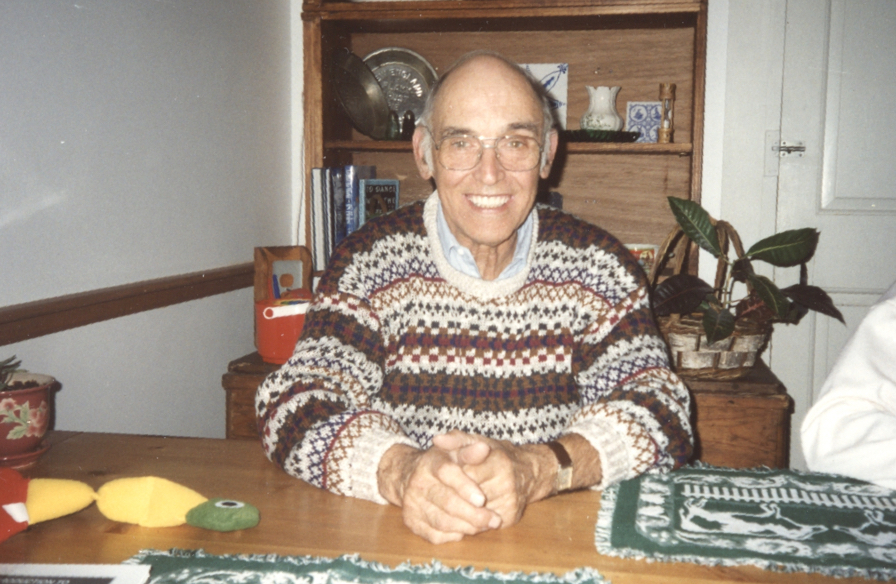
Tirrell Cook, sometime in the 90s.
For years I’ve been trying to figure out why my grandpa is so happy. He even seems to grow happier as he grows older. Born in 1923, he grew up during the Great Depression and served in the Army during World War II. He and my grandmother have been happily married for nearly 68 years.
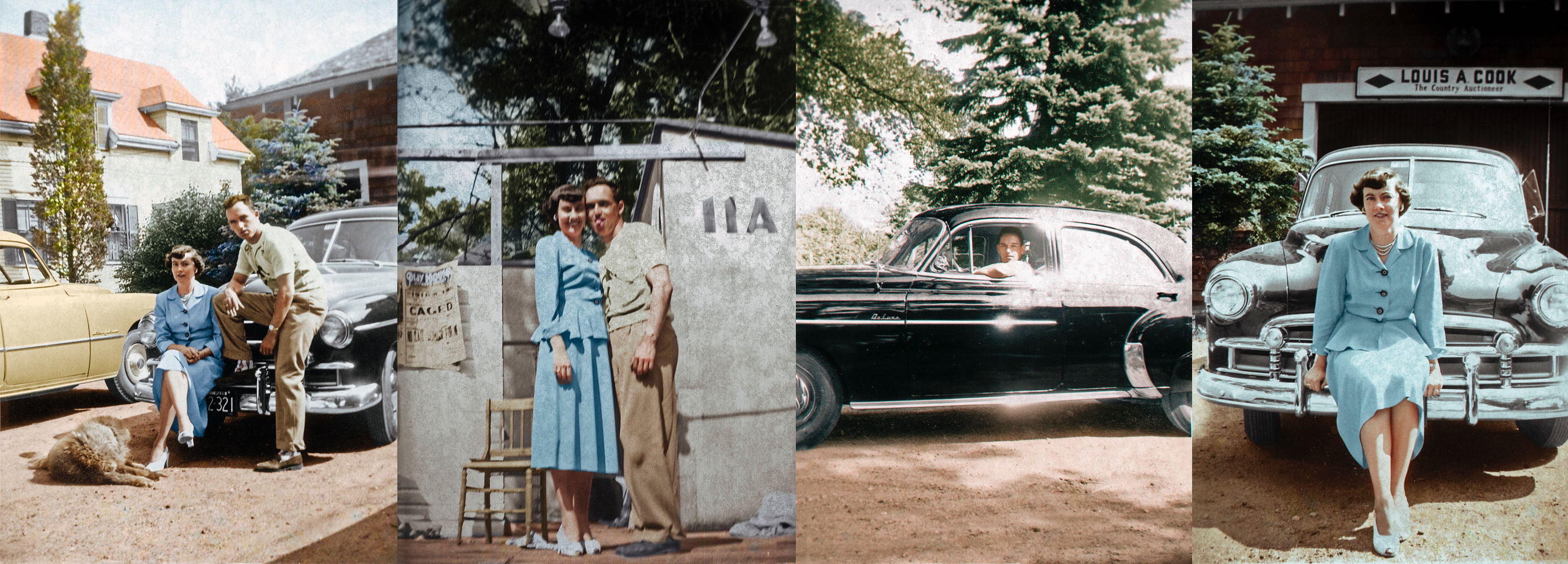
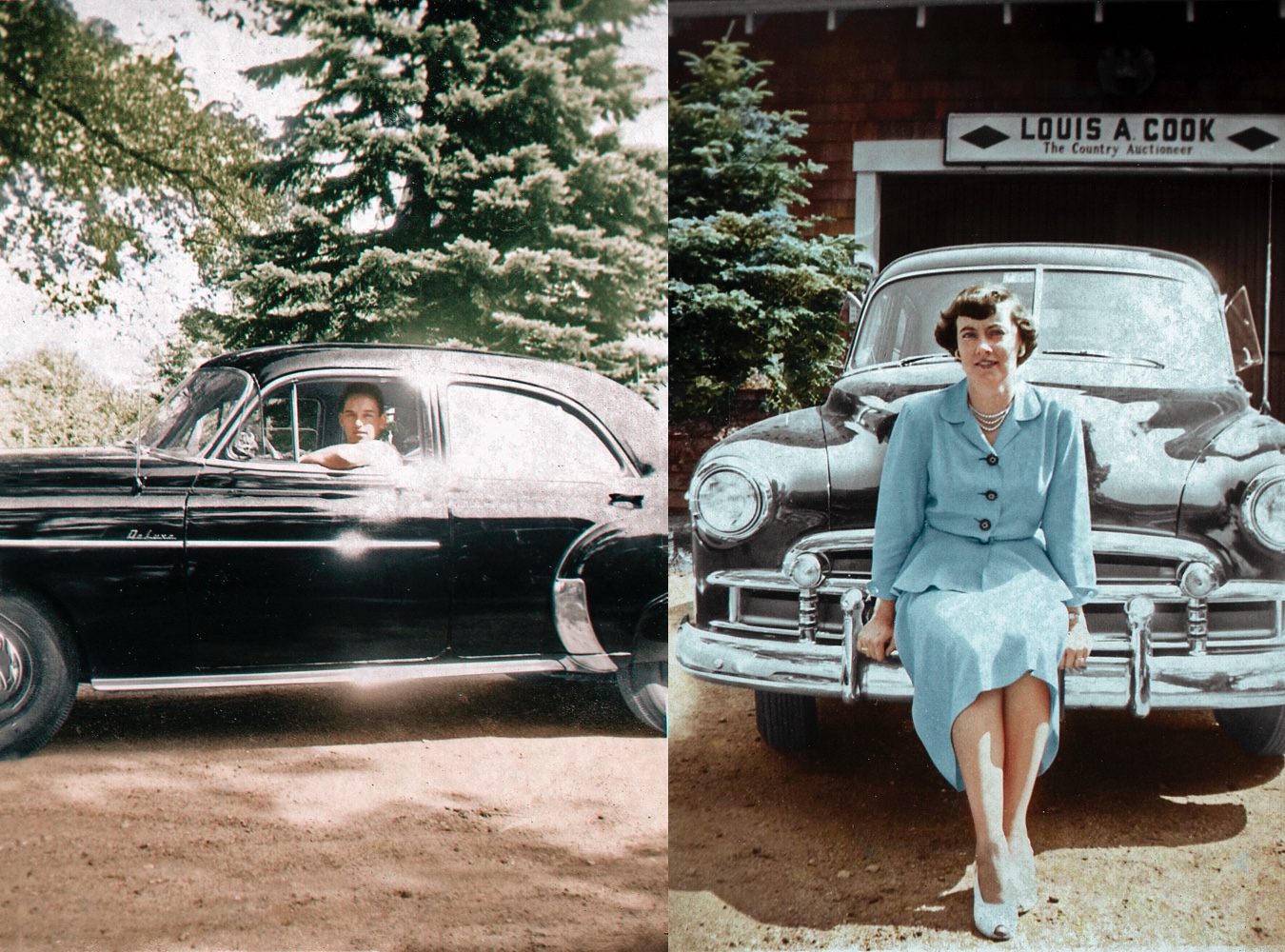
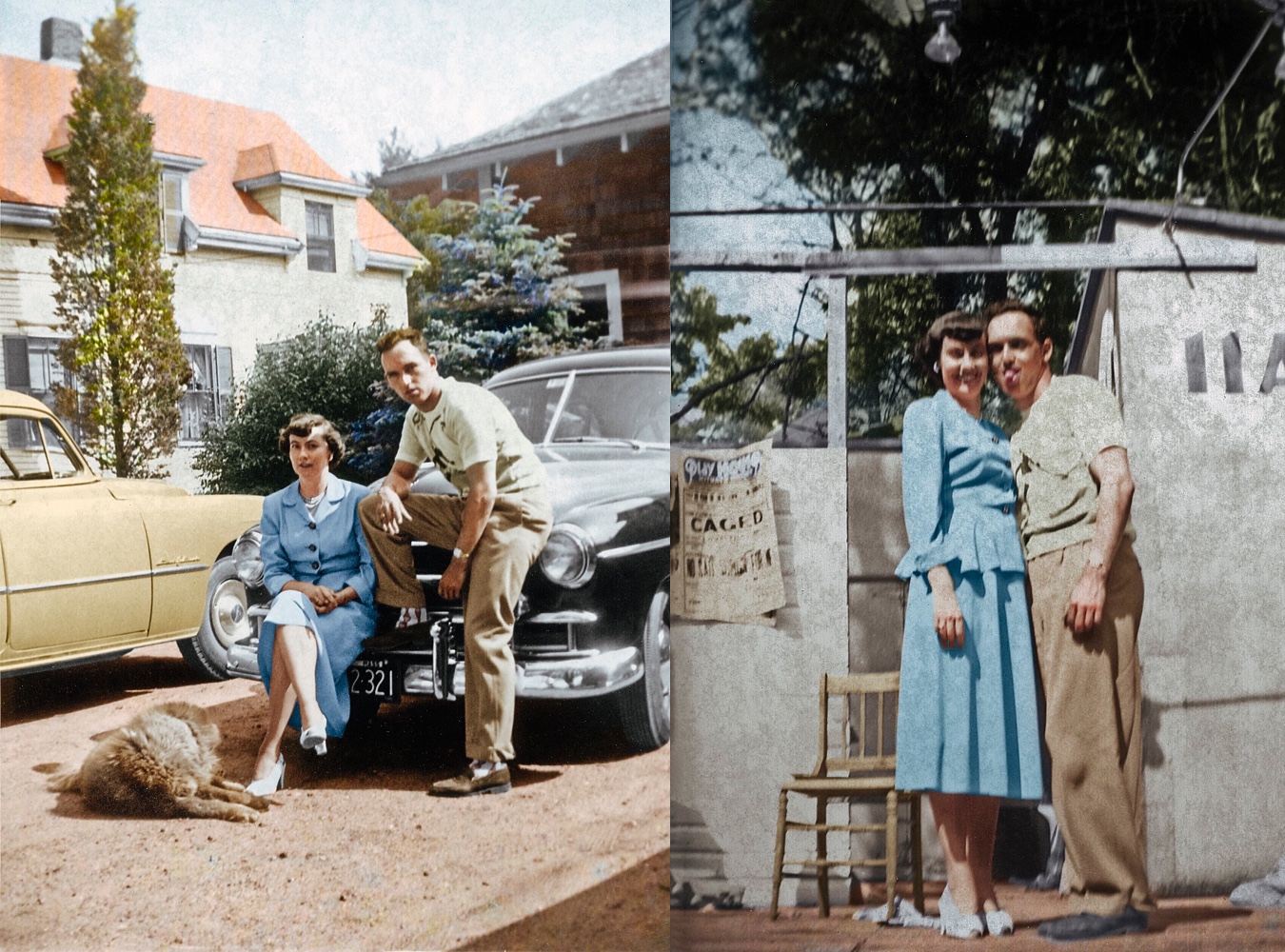
Photos taken the day after my grandparents’ wedding. We had them colorized as a Christmas gift in 2017.
Photos taken the day after my grandparents’ wedding. We had them colorized as a Christmas gift in 2017.
Just after his 4th birthday, Grandpa was hospitalized with scarlet fever in early December, the leading cause of death in children at the time. His mother didn’t want him to miss Christmas and vowed to leave the tree up until he came home. When Grandpa came home in March the tree was still up, its brown needles covering the floor. He survived the disease but lost 90% of his hearing. He considers himself the “luckiest guy in the world.”
It wasn’t until his 20’s that Grandpa was able to access hearing aids through the army. To this day, even with modern hearing aid technology, he struggles with his hearing. Later in life, arthritis in his hands make everyday tasks (like replacing his hearing aid batteries) an increasing challenge.
Somehow, even in the face of physical adversity, he manages to be the happiest guy I know. He never complains about his limits, explaining them only in a matter-of-fact way. He’s always looking on the bright side, constantly has us all laughing, and only speaks positive words about others.
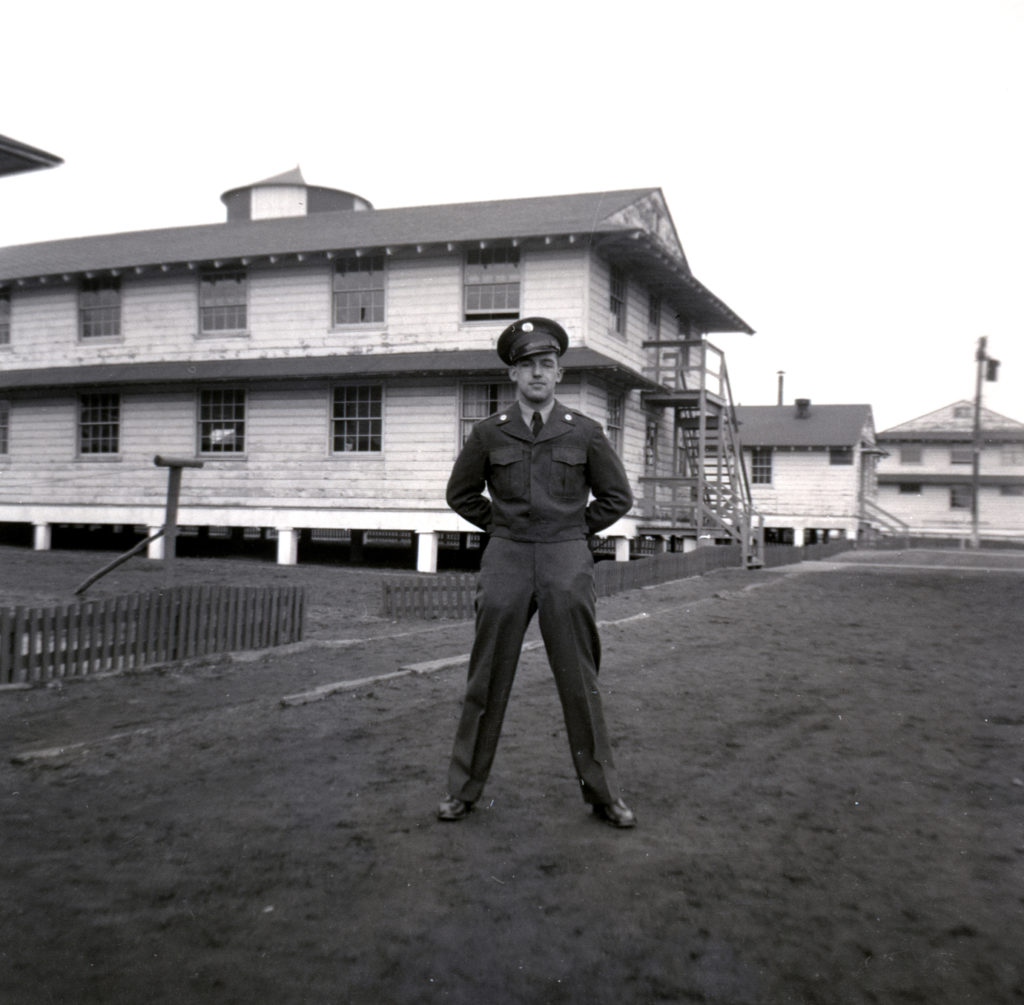
Grandpa in New Jersey, age 25, in 1948. This photo has been proudly displayed on Grandma and Grandpa’s fridge for decades. Grandpa completed basic training in New Jersey and was later stationed at Fort Lewis near Seattle, WA.
Years ago, I found myself in a low place. Just after graduating college, my brother Andy and I decided to take the plunge and go full-time on a startup. We entered the first year of MassChallenge and won $50k and we went on to raise an angel seed round. We had an amazing group of investors and mentors behind us. We built a great team and served thousands of customers. We were so incredibly fortunate.
But suddenly it came to an end. I didn’t handle it well. I was depressed, I was lost, and I didn’t even know it. I drank too much. I was in a foreign territory without the tools to dig my way out.
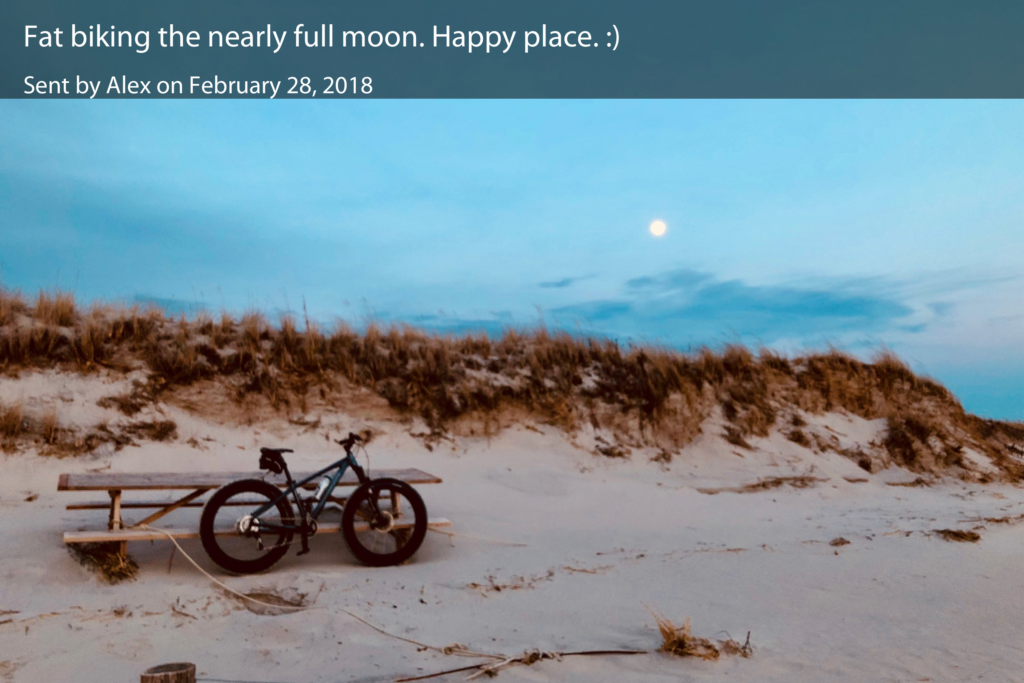
Thanks to people like Alexis Ohanian, Paul English, and Rand Fishkin there’s less stigma when it comes to talking about mental health in tech. About a year after shutting down the startup, I found happiness by using tools like mindfulness meditation and deep work. I bought a fat bike to get myself into nature as much as possible. I lost 30 pounds. Life was beautiful again.
A recent Cook-family-NanaGram I sent.
At a certain point I felt like my journey to happiness plateaued. My personal life was better than ever, I was newly engaged, and programming productivity was at an all-time high. One day while reading Search Inside Yourself I learned about the phrase Happiness is the Default State. In that moment I thought of my grandpa who is seemingly always on default happy mode.
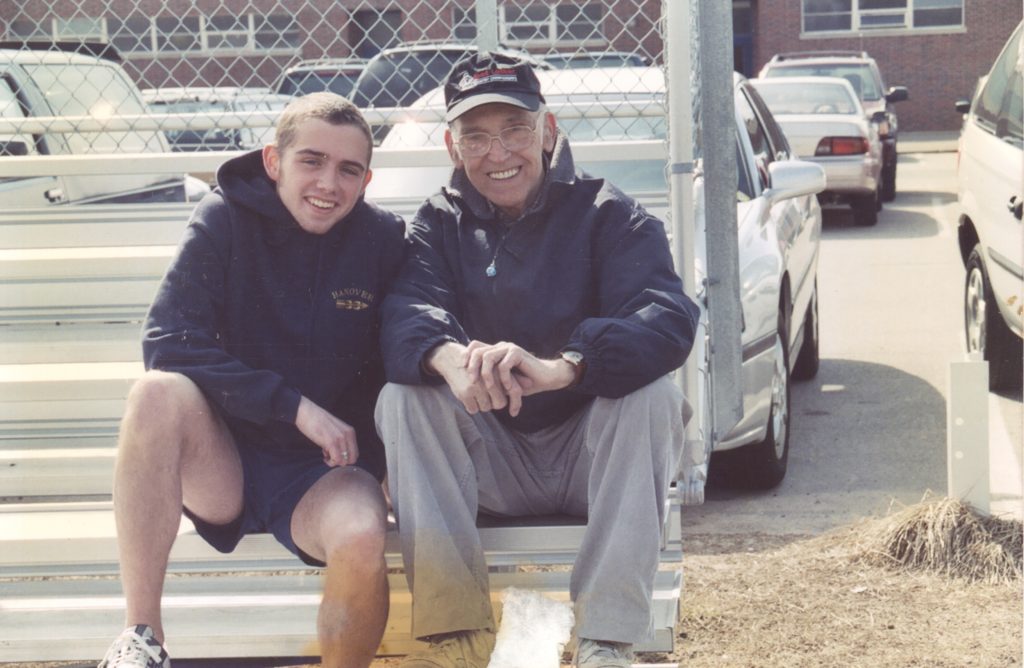
Grandpa and I in 2003. With little to do in the summer at the isolated family cottage, Grandpa turned to running. His favorite running memory is coming in 5th in the state championship cross country meet hosted at Boston College.
Knowing my grandpa is the happiest person I know, I decided to try and form the habit of getting together with him on a regular basis. Now that I was older and in a better place I thought about how much I might learn if I just carved out the time. The timing was impeccable. He’d just hung up the keys to his car for the final time after a 3rd fender-bender that summer. I worked from home and had lots of flexibility in my schedule.
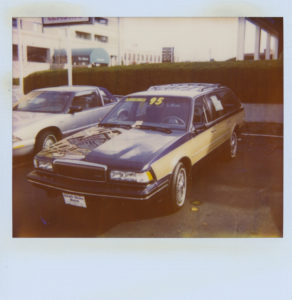
Grandpa’s favorite car of all time, his 1995 Buick station wagon. Growing up, he’d often tell me he felt like a race car driver during the day (wood paneling) and a bank robber at night (midnight blue paint).
At first I offered to just help Grandpa with errands. We went to the bank and grocery store and sometimes we grabbed breakfast or lunch. Everywhere we went he’d strike up conversation with everyone he saw, then brag about his grandkids. One time I made a trek up from a family vacation on the Cape to take him on an emergency grocery store trip. While we were waiting in line he dropped some unexpected humor. I pulled out my phone, asked him to say it once more and we sent it to my family for a good laugh.
Now I can wipe all day, just what I wanted to get. ?
On Aging & Memory
For as long as I can remember Grandpa has shared his passion for history and genealogy with his grandkids. After our errands or shared meals, he’s always detouring me all over Boston’s south shore to talk history. He shows me homes he grew up in, shares immense details about the family tree, and loves telling childhood stories. A few weeks after we started hanging out my auntie Ellen caught wind. She became my genealogy coach, pushing me to review all of the family tree data my grandpa’s niece put together on Ancestry.com and record the whole thing on GoPro.
It was during this longer genealogy deep dive that my perception of memory and old age changed completely. I’d always assumed that as people get older, they get slower – that’s life and the decline is irreversible. But after that first day, possibly through the guidance my aunt gave me on how to conduct an interview, it was as if Grandpa’s mind rewound. We were both shocked at the details he was able to recall in both historical facts and current events.
On the drive home, Grandpa put his hand on mine and thanked me for the gift I’d given him the past few months. He said he felt 20 years younger. He wanted to write a thank-you note but I said it wasn’t necessary because I heard him loud and clear in the car right then. From that moment we agreed to always focus on getting the next adventure on the calendar. To this day Grandpa continues to thank me and tells me I make him feel like he’s young again. His memory has remained in this heightened state since that first genealogy day. I often tell him he’s better at remembering all the little details of my life than most of my friends in their 30’s.
Grandpa thanking his niece Brenda for putting together the ancestry information.
Grandpa thanking my Aunt Ellen for Cook family history books she got me.
On Gratitude
Its seems like the biggest aspect to Grandpa’s happiness is his constant practice of gratitude. Nearly every time we hang out Grandpa chronicles his life — his parents, his siblings, his wife, his children and his grandchildren — sharing his massive gratitude for how it “all just seemed to come together beautifully.” Grandpa is grateful for life’s small things, too. He’s grateful when he sees a cardinal in his backyard, or his great granddaughter’s smile, or the extra grilled onions I add to his Five Guys burgers. It’s as if he’s on gratitude auto-pilot. Once I took him for a much-needed haircut just before Christmas a couple years ago. I’ve never seen someone so excited about something as simple as a haircut.
As we’re pulling up to a stoplight: “Jesus am I glad I got a hair cut! God!”.
Grandpa is constantly celebrating life’s gifts, big and small. He never complains. He’s grateful for what he does have and spends no time wanting more. The only time I’ve heard him long for the past is when we’d talk about his Buick, but even then, he’d quickly move to expressing enormous gratitude for our drives together. He’s most grateful for his grandchildren and specifically how they all went to college. In his words, “My grandkids are my legacy.”
On Tragedy
Our elders are an important connection to the tragedy of life. Both of my grandpa’s brothers served in the military. One of his brothers, under Patton’s command, was sent to visit Auschwitz along with thousands of his comrades to see the damage done in person. He sent home photos. Even though these photos have since been lost the memories of “bodies stacked like cordwood” are engrained and passed on by Grandpa and his family. Many of Grandpa’s friends and acquaintances who returned having seen the atrocities of Nazi Germany were never the same. Our elders are an important connection to the past. A closer connection to our elders might decrease humanity’s chances of repeating its lowest moments.
On Past Ways of Life
From Grandpa I’ve learned about past ways of life which we’re rapidly moving away from towards a supposed merge with machines. While nearly everyone in my family has a smart phone, my grandparents only had a land line for decades until I hooked them up with an Amazon Echo Show a couple months ago. For decades, Grandpa hasn’t really been able to talk on the phone and is limited to in-person communication. He never complains about it though and as far as I can see his disconnected lifestyle plays a role in his overall default happy state.
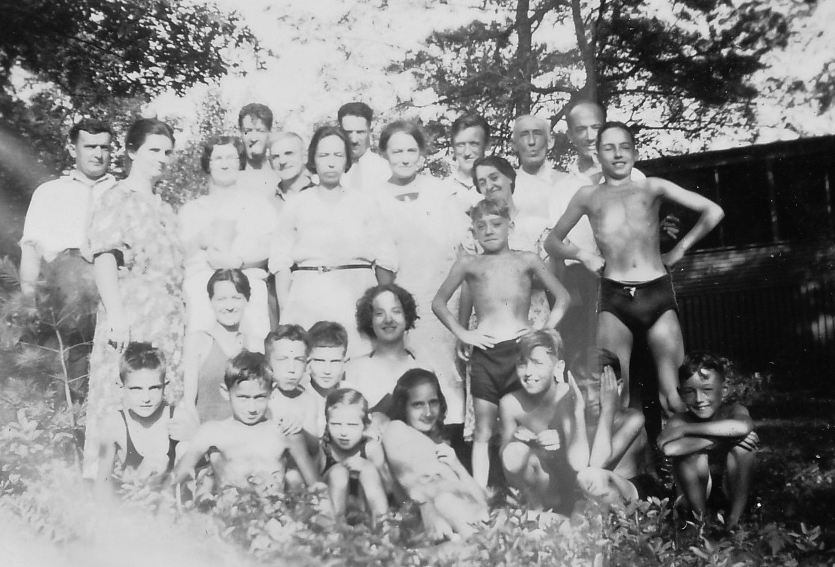
Grandpa and his extended family at their summer cottage. Grandpa boldly standing on the right, would eventually become a prolific distance runner. At 94, Grandpa is able to recall nearly every person in the photo.
Just before the Great Depression Grandpa’s mother spent everything to her name to buy some land and build a cottage on a lake south of Boston. Every year on the last day of school, Grandpa’s parents would pick him and his brothers up with their luggage and dog Rusty in the car. They’d drive down to the lake, staying there all summer until the day before school started in the fall. Their cottage was isolated — the only other building on the lake was an ice house which shipped ice into Boston by railroad — with no other children in the area. There was no electricity and no phone. The only source of heat was a brick fireplace and large cast iron stove in the center of the cottage. Many of the meals were foraged from the land – fish, mushrooms, turtles, and blueberries were staples of their diet. Grandpa and his brothers had to rely on each other and their own ingenuity for entertainment. They’d create sailboats with bed sheets, stock the lake by moving fish from nearby ponds and lakes in buckets, and walk 6 miles barefoot to get a freshly crushed lemon slushy.
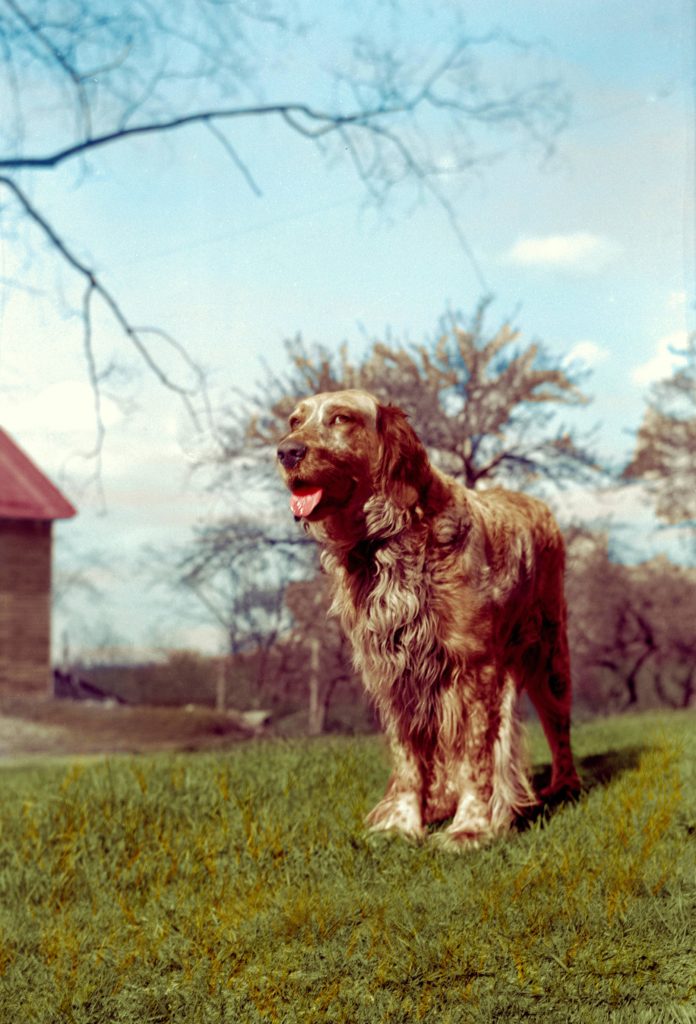
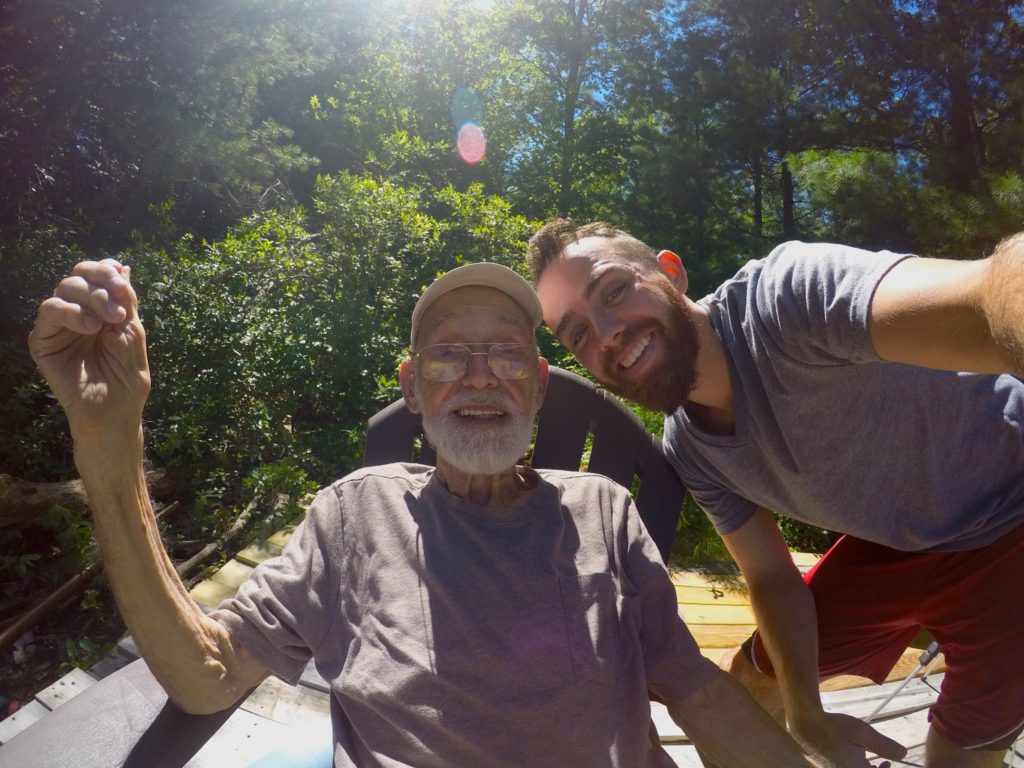
Grandpa’s dog Rusty. Either Grandpa or his brother Arnold took this photo in the early 1940’s using a camera borrowed from their aunt, just off Route 3’s exit 16 in Weymouth, Massachusetts. Rusty was a gun-shy hunting dog acquired by my Great Grandfather in a trade. We had old black and white negatives colorized and gave him the photos for Christmas in 2016.Grandpa and I visiting his childhood lake with my brother Andy, July 4th weekend 2017.
Grandpa often talks about the overall calmness of life growing up, even through the chaos of the Great Depression. His life was peaceful, there were “never any arguments”, and multiple generations all lived under the same roof. He learned from his elders. His mother went out of her way to make sure all of her neighbors were happy, delivering casseroles to those in need. She designed the cottage to have as many beds as possible and always took in friends and family who were down on their luck.
On Seeing Every Day as a Gift
Just like the first day we spent recording our genealogy session almost 2 years ago, all of our days since then — both big adventures and small errands — are a gift. There have been so many incredible, unexpected twists and turns in the journey. Grandpa and I often talk about it all, enter a state of disbelief, and share a good laugh.
Grandpa dropping some wisdom on an adventure day with my brother Andy.
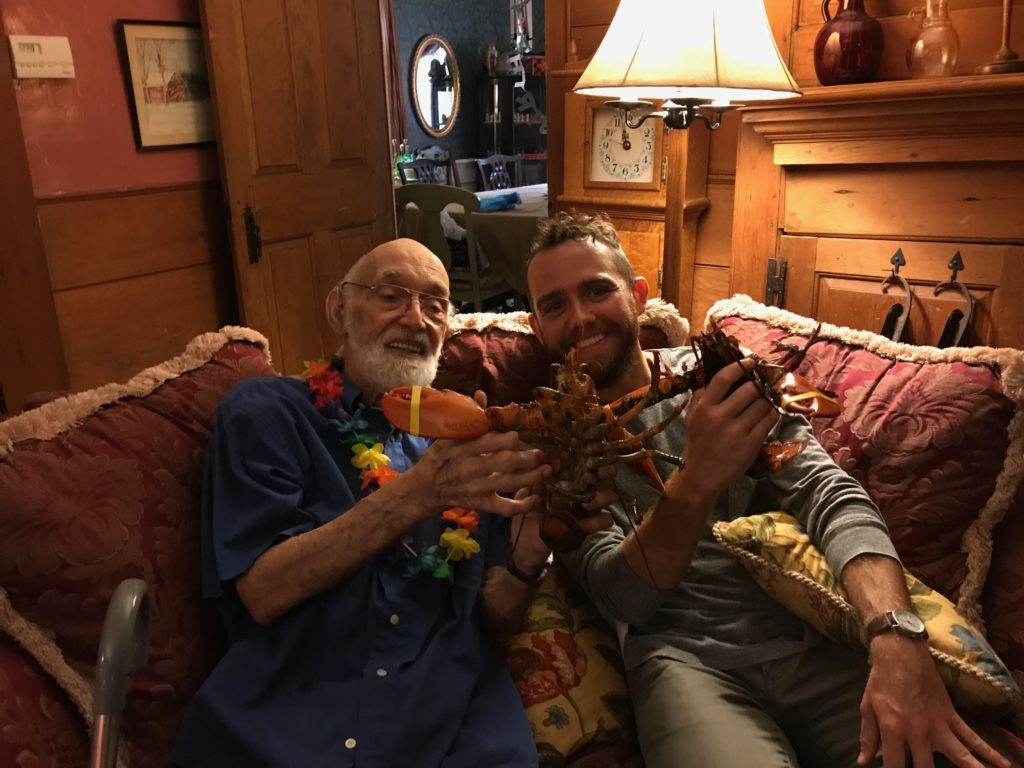
About a year and a half after we started I came close to pursuing a full-time gig again after years of work-from-home contracting. But I avoided that path for many reasons, a big one being that I didn’t want to give up the flexibility in my schedule to hang out with Grandpa. Then suddenly on Grandpa’s 94th birthday, I found myself losing a gift competition to my brother Andy. Knowing Grandpa loves lobster rolls, I picked up two live twin lobsters thinking there’s no way any of my siblings would top my gift.
At Grandpa’s 94th birthday where I came in 2nd for the best grandkid gift. Andy gave him InstaGrandpa which eventually became NanaGram.
After Grandpa and I held the lobsters and snapped a few photos, Andy unveiled a gift he called “InstaGrandpa” and a prototype he built the night before. He gave our family a unique phone number and told us to text photos to it. Every month he’d take the photos and mail physical prints to our grandparents. When Andy asked me to help bring the tool to life I instantly said yes. Over the following few months as the prototype evolved we decided to name it NanaGram, after our Mom.
Months later I found myself sitting in my grandparent’s living room on a Monday morning, watching him on a nationally broadcasted viral TV show where we negotiated for a small cash compensation for Grandpa and a NanaGram mention (Grandpa tried to get bit coin). Just after the broadcast, he turned to my grandma and said, “See? See who you married?! I’m a famous Grandpa. I’m America’s Grandpa!”
I love you Grandpa.
Thanks to Janet Cook, Alison Nogueira, Jay Acunzo, Andy Cook, Dan O’Shea, Ellen Jameson, and Katie Woods for reading drafts of this post.
A few weeks ago my grandpa’s niece Brenda asked if I’d coordinate a Skype call with my grandpa review some old family photos. My grandparents didn’t have Internet yet so I picked up my grandpa and we drove to my parent’s house nearby. I gave Grandpa a blanket and cranked the heat as I set up my MacBook and an external Bluetooth speaker.